What Sommeliers Know About Selling That MBAs Don't
Mar 24, 2026
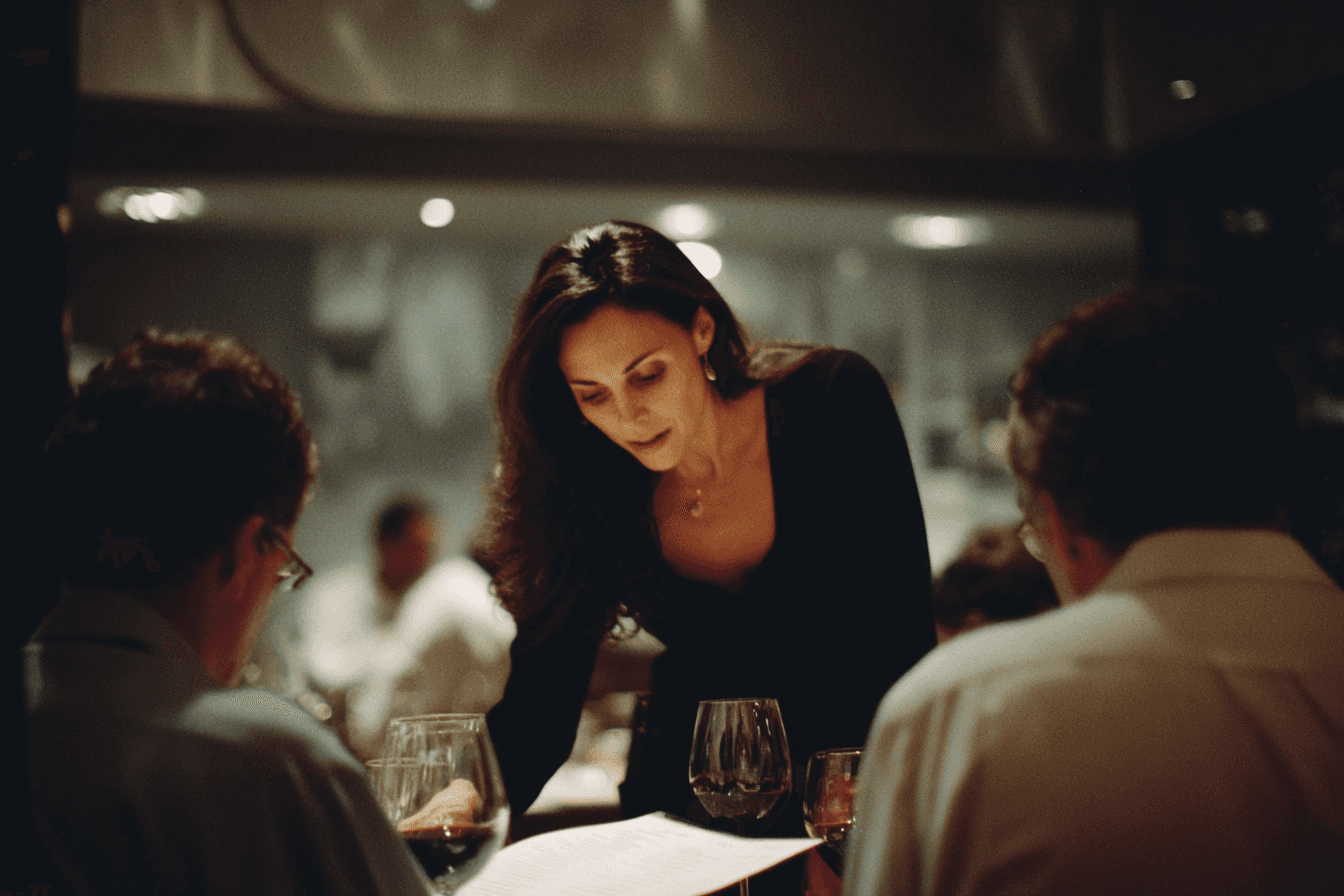
You're seated at a nice restaurant. The sommelier approaches. You haven't said anything yet about what you want (you've barely looked at the list) and yet somehow, within the next ten minutes, you're holding a glass of exactly the right wine.
That's both good hospitality and a skill, and it maps almost exactly to what separates good salespeople from great ones.
Why Frameworks Aren't Enough
Most sales training is built around frameworks like MEDDIC, SPIN, challenger… whatever the methodology of the moment is. These frameworks give structure to conversations that could otherwise drift, but they also carry a hidden cost: they teach reps to interrogate rather than observe.
A sommelier doesn't do this. A good sommelier has internalized every framework there is (terroir, vintage variation, food pairing chemistry, the economics of a wine list) and then puts all of it in the background so that what comes forward is you. Your preferences, your signals, your unspoken context.
Three Things Sommeliers Do That Reps Should Steal
Here's the specific thing sommeliers do that translates almost verbatim.
They treat silence as data. When you hesitate over the Burgundy section, that's information. When you put the menu down and look at your guest instead of at the list, that's information. The pause after they suggest a certain priced bottle tells them something. The way you say "that sounds good" (whether it's genuine or polite) tells them something else. A trained sommelier is tracking all of this without making it weird, without asking you to explain yourself, without saying "can I ask why you're hesitating?"
Great AEs do the same thing in discovery. They've learned that the most important information in a sales conversation is often what doesn't get said. The prospect who answers every question but never volunteers anything extra. The champion who gets quieter when you mention budget. The stakeholder who nods along but checks their phone. The rep who's only listening for what to put in the CRM misses all of it.
They use expertise as service, not performance. This is the one that's hardest to teach.
A lesser sommelier will only tell you things, which is impressive of course, but it also could be exhausting. And it subtly repositions the conversation around them rather than around what you actually need.
The best sommelier you've ever encountered probably didn't do much of that. Maybe they said one specific, useful thing about it like, "it's got a little more weight than it reads, good with the pasta you ordered", and then they stepped back. You felt guided, not lectured. You felt like someone was taking care of you, not showing off.
This is where most reps get it wrong, especially in technical or product-led sales. The instinct is to demonstrate competence and show the prospect that you know what you're talking about. And while competence matters, there's a difference between having expertise and performing it. Prospects don't need to be impressed by your knowledge. They need to feel like your knowledge is working for them.
The best reps have usually learned, often the hard way, to hold their expertise lightly. To deploy it precisely where it's needed and then let it recede. The goal isn't for the prospect to think "this rep really knows their stuff." The goal is for the prospect to think "I feel confident about this decision."
They make the recommendation feel like it came from you. This is the hardest one.
The sommelier who does their job well has, in a real sense, guided you to a specific bottle… maybe even one they needed to move that week, maybe one with a higher margin than what you would have ordered blind. But you don't experience it as being guided. You experience it as discovering something that fits. The agency feels like yours.
This is such deep attention to what you need that the recommendation could only have been built for you. It couldn't have been copy-pasted from the last table.
In sales, this is the difference between a pitch and a conversation. A pitch is what you prepared. A conversation is what you built together, in real time, in response to this specific person. The rep who can consistently make prospects feel like they arrived at the decision, rather than being walked to it, is the rep who closes without friction. Not because they're slick, but because the decision genuinely fits.
What Business School Doesn't Teach
MBA programs teach a lot of useful things. They teach market analysis and financial modeling and organizational behavior. What they are less good at (by design, really) is teaching people to pay attention. To slow down inside a conversation and track what's actually happening.
A good sommelier's craft is almost entirely that. This is the accumulation of years of training, and then years of practice, in the service of being genuinely present with another person and figuring out what they actually need.
The Quality That Compounds
The reps who last and who build the kind of books that compound over time, where customers expand and refer and come back even after switching companies, tend to have this quality. They're not necessarily the most technically polished, but having the ability to make another person feel understood from discovery to closing is truly a superpower.
That shift is quieter than learning a new methodology. Over the course of a career, it's probably the thing that matters most because that’s the difference between selling that feels like work you do to people, and selling that feels like something you build with them.
A good sommelier knows this, and it’s the whole job, really… the wine is just the subject material.